Main photo by © Kristian Buus
Marking a quarter-century of climate change research, we reflect on 25 transformative milestones in the Tyndall Centre’s history, each helping to shape science, policy and culture.
Since launching as a partnership of universities to bring together traditionally siloed academic disciplines, with funding from three UK Research Councils, the Tyndall Centre for Climate Change Research has continued to advance sustainable solutions and responses to climate change.
Last September, as we marked the start of our 25th anniversary year, we hosted the Critical Decade for Climate Action Conference. Looking ahead to the urgent climate action still needed, it was also an opportunity to reflect on the progress achieved over the past 25 years.
From science and policy to art and culture, and from local action to global reach, our successes in the last two decades show that evidence-based research can drive meaningful change.
CHANGING HOW THE WORLD UNDERSTANDS CLIMATE CHANGE
1. Building a new kind of climate research
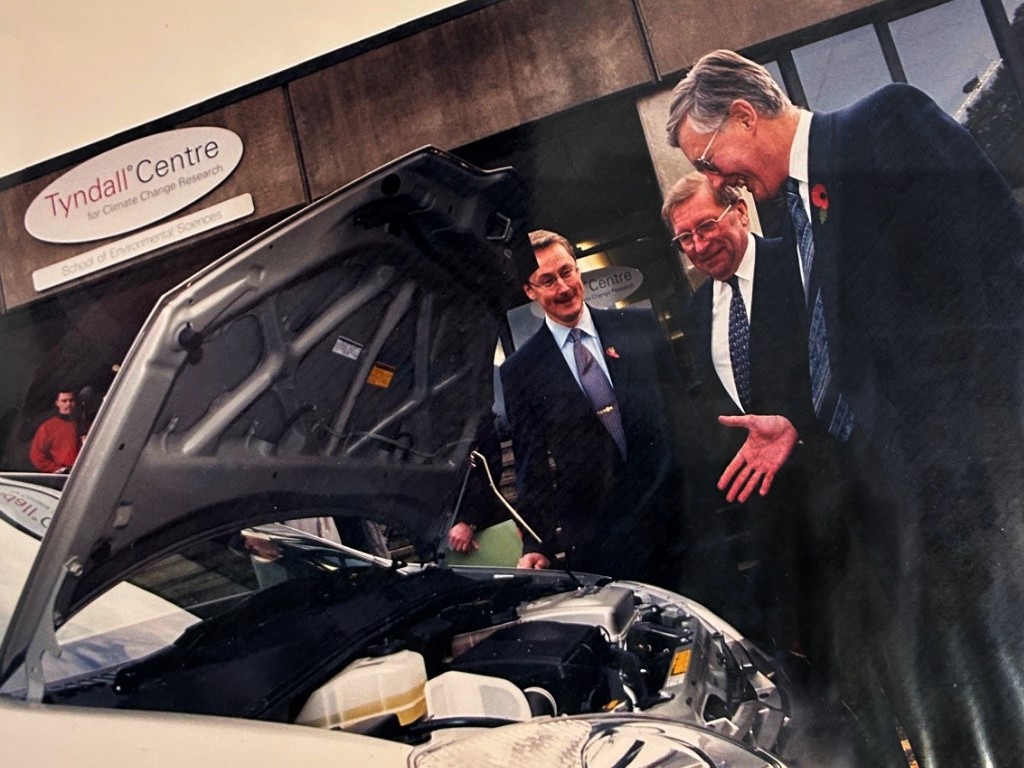
When it launched in 2000, the Tyndall Centre brought together climate scientists, engineers, economists and social scientists in a completely new way, led by Professors Mike Hulme and John Schellnhuber, the founding Directors. Today, interdisciplinary, co-produced research for policy is common to all universities, in the UK and abroad. The Tyndall Centre remains one of the UK’s biggest interdisciplinary research entities, combining knowledge from every angle to tackle the climate crisis. We remain independent: evidence-led, mission driven, and collaborative.
2. Decarbonising the UK: A seminal roadmap
Our 2005 report was pivotal in guiding the UK in reducing carbon dioxide emissions across all economic sectors. The report charted deep CO2 cuts across every economic sector – including power, transport, heat, and industry – to help inspire national mitigation strategies. We revisited the report this year, in 2025, as part of our Critical Decade for Climate Action Conference. The new report on Decarbonising the UK by Gaurav Gharde, Sarah Mander, Carly McLachlan, Chris Jones and Alice Larkin revealed that the UK uses less energy now than anyone anticipated 20 years ago but opportunities to act on such potential were missed – especially with everyday solutions in public transport, home insulation, and air travel.
3. Shaping the UK Climate Act
The Tyndall-Manchester team’s carbon budgeting work directly influenced the UK Committee on Climate Change and Welsh Government, contributing to the legal shift from a 60% to an 80% emissions reduction target by 2050. This milestone earned coverage in national press as an example of evidence-based policymaking. Corinne Le Quéré, Richard Dawson, Hayley Fowler and Andy Jordan are all past or current members of the Climate Change Committee.
4. Influencing IPCC assessments
Intergovernmental Panel on Climate Change (IPCC) reports are crucial to informing governments’ climate change policies. Tyndall Centre Professors such as Rachel Warren, Corinne Le Quéré, Jeff Price and Robert Nicholls have led contributions to IPCC reports, creating iconic visuals such as the “burning embers” diagrams that have informed global policy thresholds and biodiversity risk. In 2007, Robert Nicholls was the convening lead author for the coastal chapter for the IPCC fourth assessment report. That same year, the Nobel Peace Prize was jointly awarded to the IPCC with US Vice President Al Gore.
5. Calculating the Global Carbon Budget
The Global Carbon Project (GCP) publishes an annual report that tracks the trends in global carbon emissions and sinks and measures the amount of atmospheric CO2. Two Tyndall Centre members – Corinne Le Quéré and Matthew Jones – are key members of the Global Carbon Budget’s Core Team that contribute to this yearly assessment, which helps track our progress in meeting the Paris Agreement goals, and is released around the time of the UN Climate Change Conference (COP).
6. Protecting global biodiversity
Through a collaboration called the Wallace Initiative, Tyndall Centre’s Rachel Warren and Jeff Price have helped create one of the world’s largest assessments of climate change impacts on biodiversity. Using statistical models to identify the preferred climate of more than 120,000 species, the team projected how plants, animals and fungi would respond to 1.5°C, 2°C, 3°C and 4°C of global warming. The research has helped quantify the biodiversity benefits of limiting warming to 1.5°C and highlighted the increasing risks to ecosystems and species under higher warming scenarios.
FROM RESEARCH TO CLIMATE ACTION
7. Putting aviation in the spotlight
In 2005, we were one of the first to warn that UK government policies for expanding aviation and reducing emissions are in direct conflict, as part of work led by the Tyndall Centre at Manchester University, published in the ‘Decarbonising the UK: Energy for a climate conscious future‘ report by Kevin Anderson, Alice Larkin and Sarah Mander. That research sparked debate that continues today (including legal challenges against Heathrow’s expansion), with protestors at Heathrow Airport’s Climate Camp even taping this report to their hands. That aviation and decarbonisation are mutually exclusive may have helped push the EU to include aviation in its emissions trading scheme. It certainly created awareness of the conflict between frequent flying and an environmentally friendly lifestyle.
8. Leading the way on shipping
Like with aviation, we have influenced the international shipping industry, focusing particularly on the suite of near-term interventions that can make a material difference to maritime emissions in the coming decade, and helping to secure funding for several shipping projects. Tyndall Centre researchers, such as Simon Bullock, James Mason and Alice Larkin, have contributed to the evidence base underpinning international shipping decarbonisation targets, including the International Maritime Organization’s 2018 commitment to reduce emissions by at least 50 per cent by 2050 and the sector’s subsequent net-zero-by-or-around-2050 goal.
9. Driving local climate action
We have shifted the focus of local authorities’ climate plans: from long-term 2050 targets towards immediate emissions reductions to meet the goals of the Paris Agreement. Building on early work with Greater Manchester and other stakeholders, our Local Carbon Budget Tool is now used by 250 local authorities (covering around 18 per cent of the UK population). The tool translates Paris-aligned targets into local policy and is accredited for use by cities participating in the UN Race to Zero initiative. As a direct result of this research, five major city regions have adopted ambitious new climate strategies, helping to shape the operating approach of both public and private sector organisations. Additionally, all of the Tyndall Centre’s partner universities are very much involved with place-based climate action in their home cities and regions.
10. Putting people at the heart of climate adaptation
Through programmes such as ASSAR and Recovery with Dignity, Tyndall Centre researchers have helped advance a more people-centred and equitable approach to climate adaptation, demonstrating that successful climate adaptation depends not only on scientific and technical solutions, but also on understanding the social inequalities, governance challenges, and lived experiences that shape vulnerability. Working across Africa and India, this research has placed the priorities and perspectives of affected communities at the centre of adaptation policy and practice, helping to inform more equitable approaches to resilience-building. One example is the DRIER project in East Africa, which has translated complex climate and hydrological science into practical tools, including water-resource maps and a mobile phone app that allows users to explore local water storage conditions and supports drought preparedness and adaptation.
11. Guiding global coastal adaptation
Through pioneering research on coastal and delta resilience, led by former Tyndall Director Professor Robert Nicholls, Tyndall researchers have helped decision-makers understand and prepare for the impacts of sea-level rise. The DIVA Coastal Simulator has informed OECD and UN assessments of coastal climate risks, while wider delta resilience research has helped guide adaptation and resilience projects in vulnerable coastal regions around the world, including the Netherlands and Bangladesh.
12. Preparing resilient infrastructure
With extreme weather events becoming more frequent and posing a threat to essential services, cities must better prepare and adapt to changing weather. Researchers Richard Dawson and Alistair Ford at Newcastle University developed a geospatial modelling platform that now underpins the world’s first infrastructure “system of systems” analysis. This pioneering work led to the development of the first National Infrastructure Database, which looked at vulnerabilities that emerge from connections between infrastructures, such as how the loss of power can bring down an airport or railway line.
13. Getting climate risk data to decision-makers
Our OpenCLIM project has produced 70 detailed and accessible climate risk reports for counties across the UK, from Aberdeenshire to Worcestershire. These give an initial summary of local climate risks, looking at the impact of biodiversity, crops, drought and flooding, and heat stress under 2°C or 4°C of warming in the 2050s and 2080s. The reports have made this climate risk information much more accessible to local decision-makers.
RESPONDING TO TODAY’S CHALLENGES
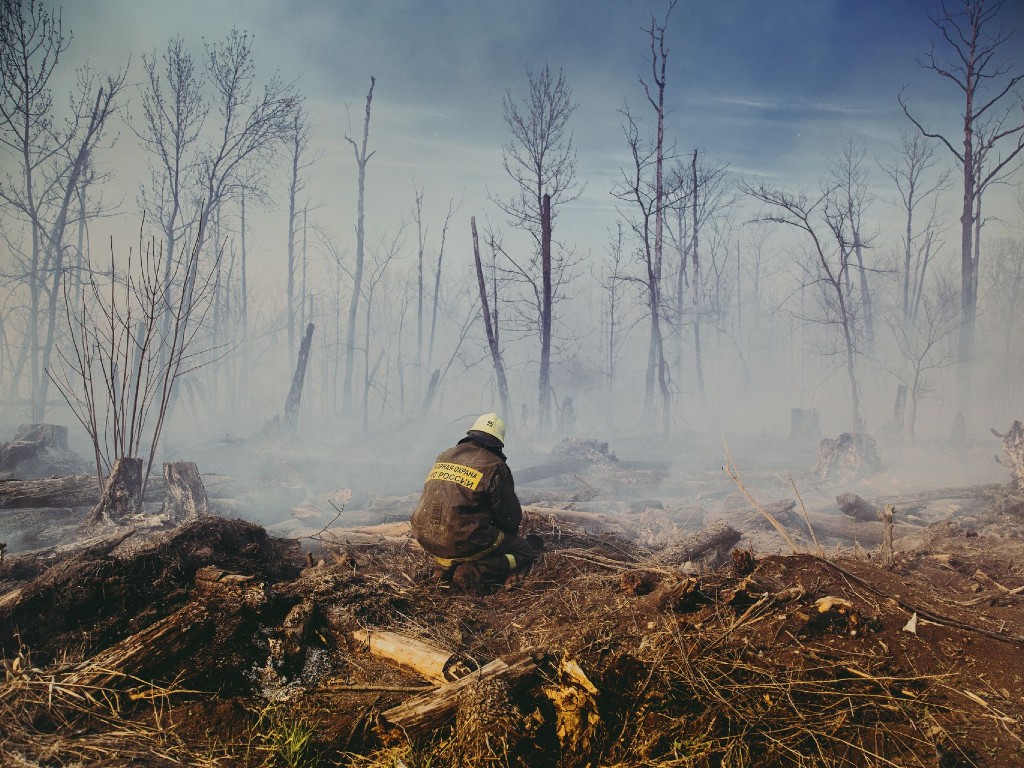
14. Monitoring extreme wildfires
Each year, the State of Wildfires report documents the season’s most extreme and impactful fires, examines their causes, explores the role of climate change, and highlights emerging trends in wildfire risk – all adding to public understanding and preparedness. This project brings together partners from every vegetated continent but is led by a core team of four, which includes Dr Matthew Jones.
15. Shaping the UK’s Green Brexit
After Brexit, researchers such as Andy Jordan and Vivien Gravey contributed evidence and analysis that informed debates on the environmental governance implications of leaving the EU. Their work was cited in House of Lords reports and helped shape discussions around measures including a new Environment Act, a new environmental watchdog for England and Northern Ireland, and the incorporation of environmental principles into UK policymaking.
16. Creating a greener future with bioenergy
Tyndall Centre researchers have helped shape understanding of how sustainably sourced biomass can contribute to net zero. Research from Patricia Thornley, Andrew Welfle and Mirjam Roeder has underpinned the UK’s bioenergy strategy, demonstrating how biomass resources can be used sustainably across heat, power and transport. The work also helped assess the potential of combining bioenergy with carbon capture and storage (BECCS), highlighting how carbon removal could contribute to climate goals while ensuring policymakers understood the opportunities, constraints and sustainability implications of large-scale deployment. This work continues through the Supergen Bioenergy Hub.
17. Collaborating with China on air pollution
In 2011, we added Fudan University in China to our list of partners. By co-directing a Sino-UK research hub at this university, we have fostered policy-relevant climate collaboration between the UK and China. This partnership even gained parliamentary notice in the UK House of Commons.
ENGAGING SOCIETY IN CLIMATE ACTION
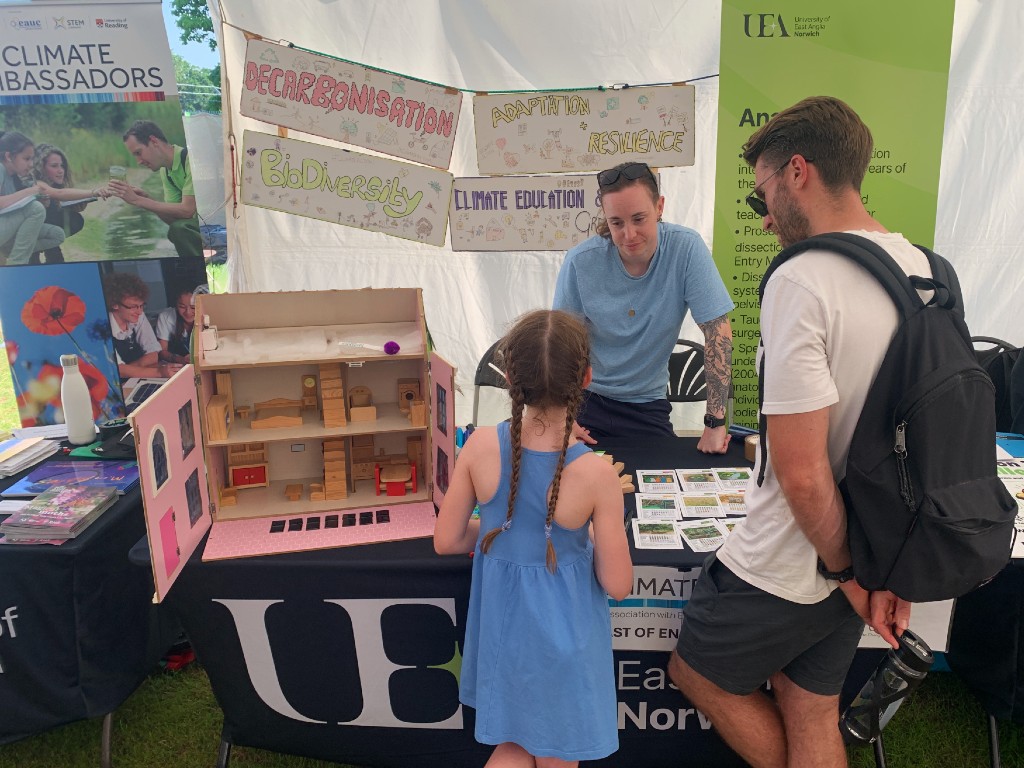
18. Helping people engage with climate change research
Our researchers have long contributed to the science and practice of climate change communication through work on public engagement, stakeholder dialogue, co-production and evidence-based communication. These approaches have been part of the Tyndall Centre’s research method from the outset, well before they became widely established practices. Asher Minns has developed climate communication training to help researchers engage more effectively with public audiences. This work has contributed to climate communication guidance, including resources commissioned by the IPCC to support scientists in communicating climate change findings. Jordan Harold has also helped build capacity among researchers, specifically looking at data visuals as essential tools in science communication.
19. Breaking down climate science for policymakers and public
We designed the innovative ScienceBrief platform: a resource for understanding the scientific consensus on key climate change issues. This intuitive tool gave people summaries (or ‘Briefs’) of peer-reviewed research, highlighting the level of agreement among scientists on timely topics. In an age of misinformation and disinformation, easy-to-use tools like this now matter more than ever.
20. Understanding the psychology of pro-climate actions
Through strong links with the Centre for Climate Change and Social Transformations (CAST), Tyndall Centre researchers have helped advance understanding of the social changes needed to achieve deep emissions reductions, exploring how individuals, communities, organisations, and governments can accelerate climate action. Bringing together social and physical scientists, this collaboration has supported research on public engagement, behaviour change, and citizen participation, helping to place people at the heart of climate solutions.
21. Decarbonising the cultural sector
When Liverpool became the world’s first UN Climate Change Accelerator City in 2024, Tyndall Centre researchers were chosen to independently evaluate the year-long programme that tests how the live music, film and TV sectors can decarbonise using a city-led approach. The report on the findings, from Dr Lois Pennington, Professor Carly McLachlan, Dr Sarah Mander and Dr Chris Jones, represents a big step forwards in helping other cities decarbonise their cultural sectors through place-based climate action. It also follows other work with the band Massive Attack to create a roadmap for the UK live music sector to reduce emissions.
22. Putting Climate Ambassadors into schools
This England-wide scheme supports 2,500 educational settings with expert advice and resources. With the University of East Anglia (UEA) as the regional coordinating hub for Climate Ambassadors in the East of England, and Newcastle University as the coordinating hub for the North East, the Tyndall Centre has worked with hundreds of volunteers to help schools develop climate action plans and appoint sustainability leads. Even outside of this project, we continually work with young people and educators, such as putting on “mini-COP” or “Ask Me Anything” events.
23. Thinking creatively on climate
We are always mulling over how we can help people think a bit differently about climate change – whether it’s researchers creating a ‘2050 Garden’ at the 2008 Chelsea Flower Show in London (for which Johanna Forster won a silver medal) or commissioning Janice Kerbel as the Tyndall Centre’s first ‘artist in residence’ (Home Climate Garden now sits in the Arts Council Collection). We also appointed the UK’s very first Curator of Art and Climate Change who, while at the Sainsbury Centre for Contemporary Visual Art, put on exhibitions that included Planet for Our Future: How Do We Adapt to a Transforming World? (2023) and Can the Seas Survive Us? (2025).
LOOKING TO THE FUTURE
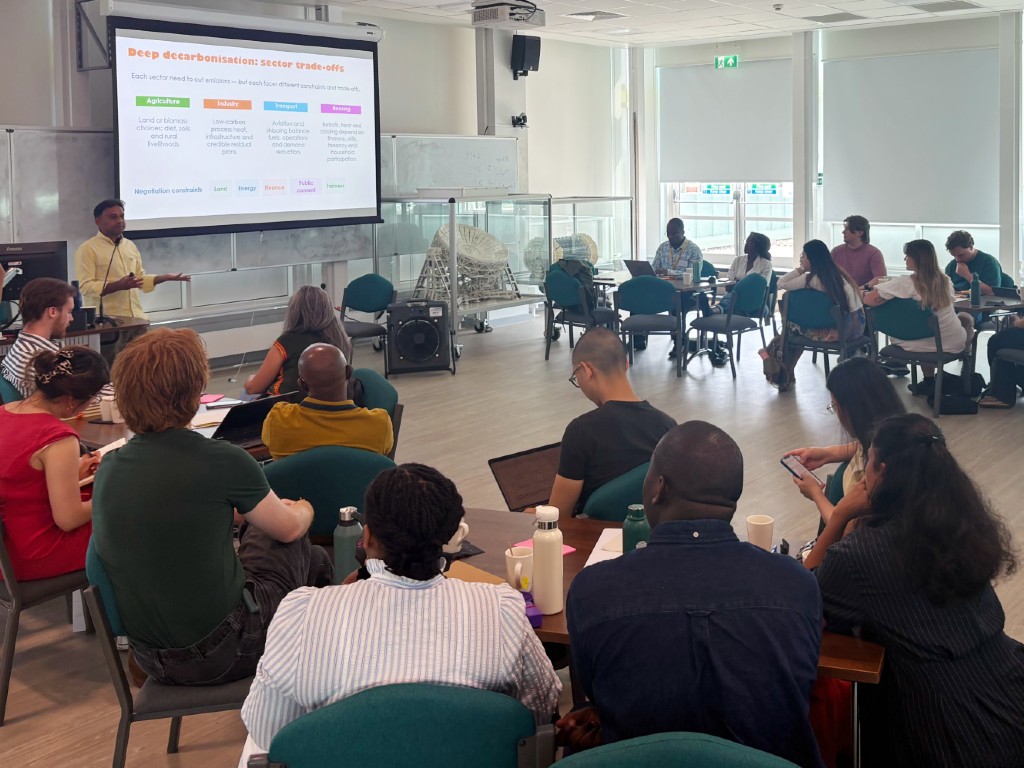
24. Empowering early-career climate researchers
For 25 years, the Tyndall Centre has trained and supported generations of climate researchers who now work across academia, government, industry and civil society. Here at the Tyndall Centre, we have always understood that our our early career researchers are the lifeblood of the Centre. Our Tyndall Early Career Network (TECN) continues to nurture emerging talent and ensure ongoing innovation and passion among the next generation of climate leaders. Lorraine Whitmarsh, Tyndall Centre member and Director of CAST, confirms this:
“I joined Tyndall as a post-doc about 16 years ago and I have seen first-hand the impact it has had. It has grown a whole cohort of young researchers who are uniquely enthusiastic, positive, collegiate, and keen to make a difference and tackle climate change.”
25. Defining climate responsibility for future generations
In 2024, our briefing note by Professor Corinne Le Quéré, ‘Attribution of observed global warming to countries‘, formed part of Vanuatu’s written statement to the International Court of Justice (ICJ). The briefing demonstrated the scientific backing for legal accountability in climate impacts. It was based on previous research, led by Matthew Jones, which determined national contributions to climate change due to historical emissions of greenhouse gases. In 2025, the ICJ gave its opinion on the landmark case: “[f]ailure of a State to take appropriate action to protect the climate system from GHG [Greenhouse Gas] emissions… may constitute an internationally wrongful act which is attributable to that State”.
We are proud of these achievements but there is always more to be done. We continue to think through ways that our research and expertise, across all of our partners, can have meaningful impact.
—
This list cannot capture everything we do or have done at the Tyndall Centre for Climate Change. Stay on top of our updates to find out more.
The article was written by Sophie Hopesmith, Communications Officer at the Tyndall Centre for Climate Change Research.