An independent evaluation of Liverpool’s year as the world’s first UN Climate Change Accelerator City reveals what worked, what didn’t, and what cities need to do to decarbonise their cultural sectors through place-based climate action.
The culture sector has ambitious goals for tackling its impact on the climate. To achieve them, it needs it needs to make bold changes – many of them linked to place-based actions in the locations they operate in and needing multi-stakeholder solutions.
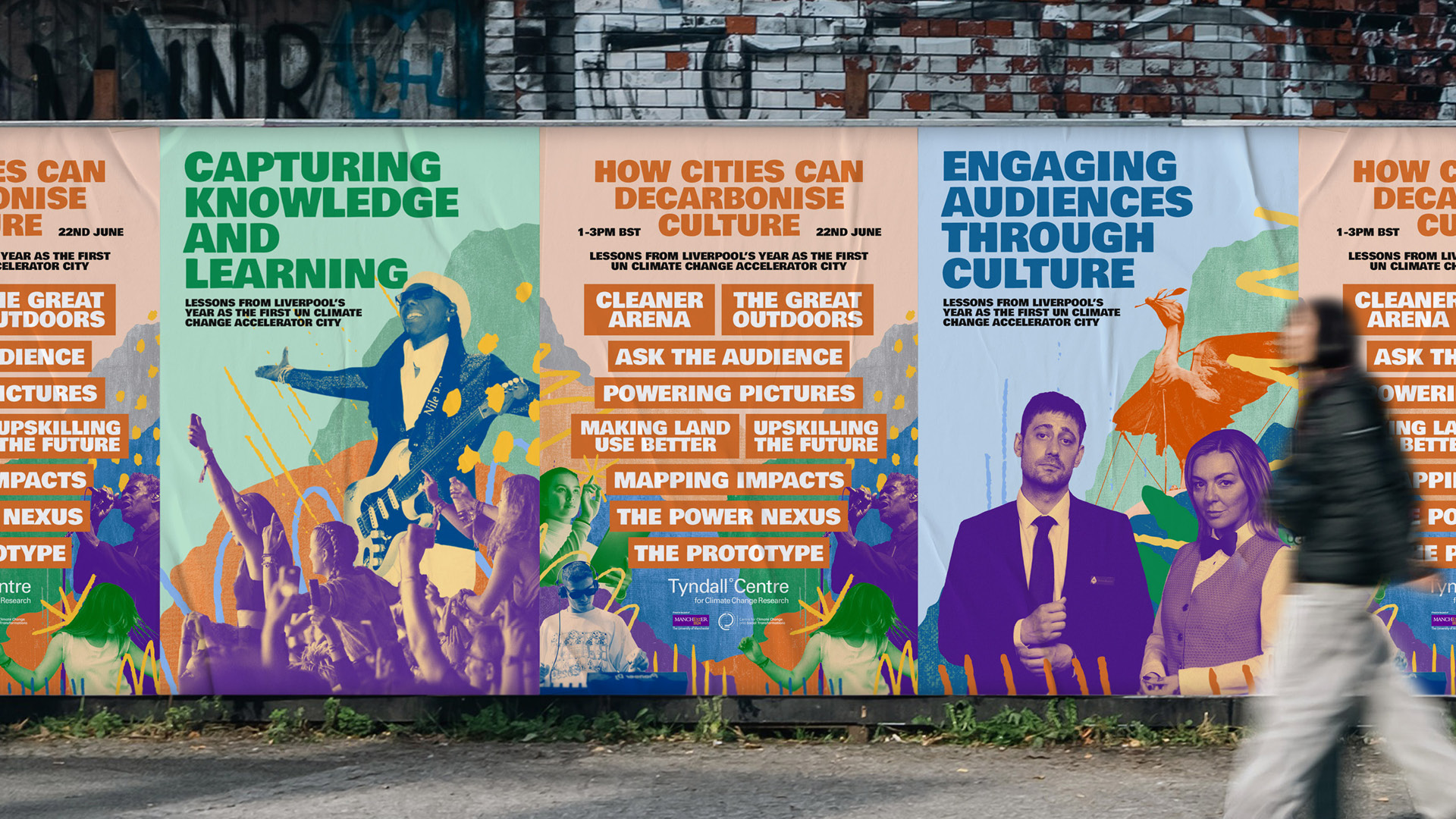
In 2024, Liverpool was chosen as the world’s first UN Climate Change Accelerator City: a year-long programme testing how the live music, film and TV sectors can be decarbonised using a city-led approach.
This report is an independent evaluation of that year by the Tyndall Centre for Climate Change Research. It looks across nine pilots that span live events, sustainable TV production, transport, grid infrastructure, land use and skills, and captures what happened, what worked, what didn’t, and why.
Alongside the pilot findings, the report draws out the structural lessons for any city trying to decarbonise its cultural sector, including the legacy of an accelerated programme of activity on the council itself. It also reflects on the Accelerator City model, and what future cities will need to succeed as the programme moves forward.
Authors
This report was written by Dr Lois Pennington, Professor Carly McLachlan, Dr Sarah Mander and Dr Chris Jones, researchers in the Tyndall Centre for Climate Change Research and the Centre for Climate Change and Social Transformations, at the University of Manchester.
Download the full report (PDF) or read below:
Related links
- Discover how Tyndall Manchester analysed a homecoming gig for Massive Attack
- What is the role of art and museums in the climate crisis? Find out more in our podcast
- Learn more about the partner universities that make up the Tyndall Centre for Climate Change Research