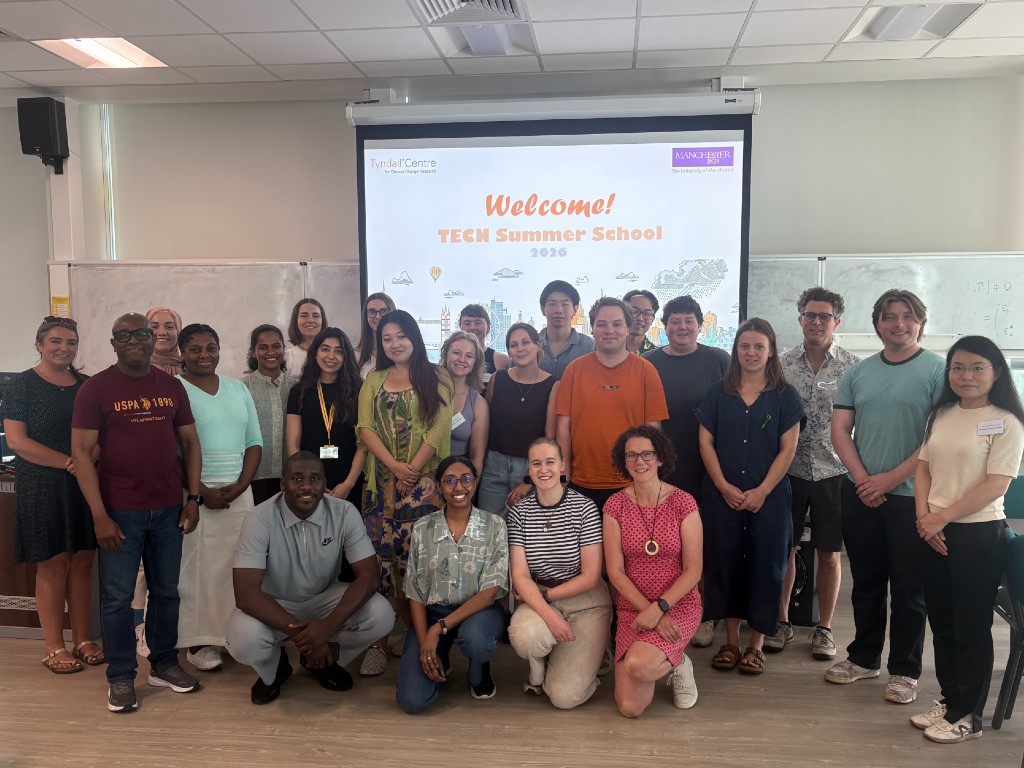
Tara Taylor-Deacon and Wasundara Doradeniya reflect on the 2026 TECN Summer School, a three-day event that brought together early career climate researchers from across the Tyndall Centre for Climate Change Research. Here’s why they think interdisciplinary and cross-sector working is essential to addressing today’s climate challenges.
Climate change is shaping our world at an unprecedented pace. From increasingly frequent extreme weather events to growing pressures on public health, food systems, and natural resources, profound questions as to how we can adapt, transform, and build resilience for a green future must be answered. Yet, addressing these challenges requires more than scientific knowledge alone. It requires productive collaboration across disciplines, institutions, and sectors.
The Tyndall Early Career Network (TECN) held a Summer School in Manchester in July 2026, which brought together postgraduate and post-doctoral academics from across the Tyndall Centre for Climate Change Research network to explore these challenges. Over three days, participants engaged with the four central themes that underpin Tyndall research: accelerating social change; achieving health and wellbeing through climate action; catalysing adaptation and resilience; and reaching zero emissions.
The summer school created a space for participants to discuss the broader role of climate research across society. Through workshops, panel discussions, debates, and informal networking, we explored how research can contribute to meaningful societal change while also reflecting on the opportunities and pressures facing the next generation of climate scholars.
Tackling interconnected challenges
The summer school was structured around the four Tyndall research themes. While these themes are often discussed separately, one of the strongest messages from the event was how deeply interconnected they are.
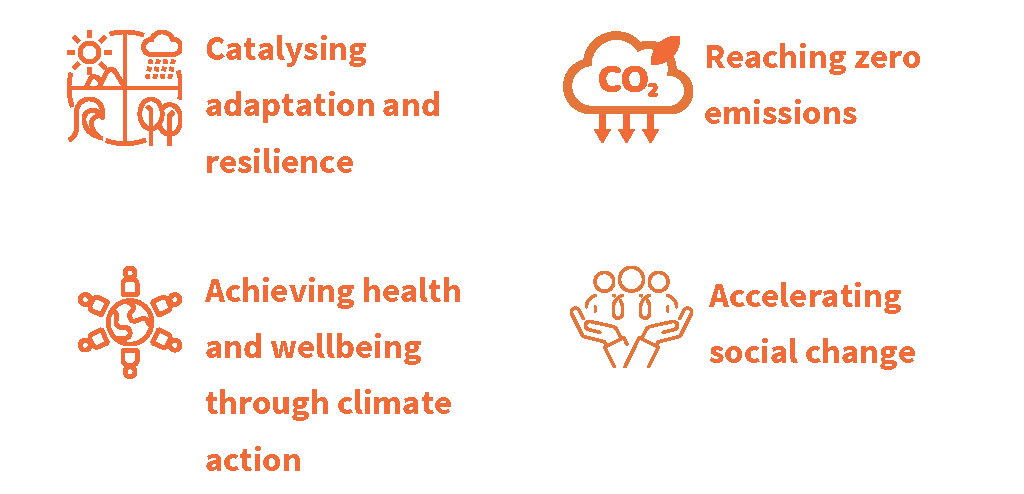
Reducing emissions, for example, cannot be considered independently of social equity, public health, or climate resilience. Similarly, adaptation measures must account for social, economic, and environmental implications. Through interactive workshops and debates, participants were encouraged to critically engage with their research beyond their discipline and consider how climate-related challenges and solutions interact as part of a wider system. Exploring the connections between the four themes highlighted the complexity of climate challenges, but also the opportunities that emerge when researchers work across disciplines and engage with perspectives different from their own.
Bringing together researchers from different backgrounds revealed how diverse approaches can complement one another and generate new ideas that may not emerge within a single field of study.
Climate research beyond the academic bubble
Entering policy and practitioner spaces can feel daunting as an early career researcher, as we begin to develop our academic identity. Throughout the Summer School, we welcomed cross-sector speakers to discuss the most productive ways of fostering and maintaining cross-sector networks to elevate our research, communicate findings effectively to different audiences, and navigate difficult trade-offs.
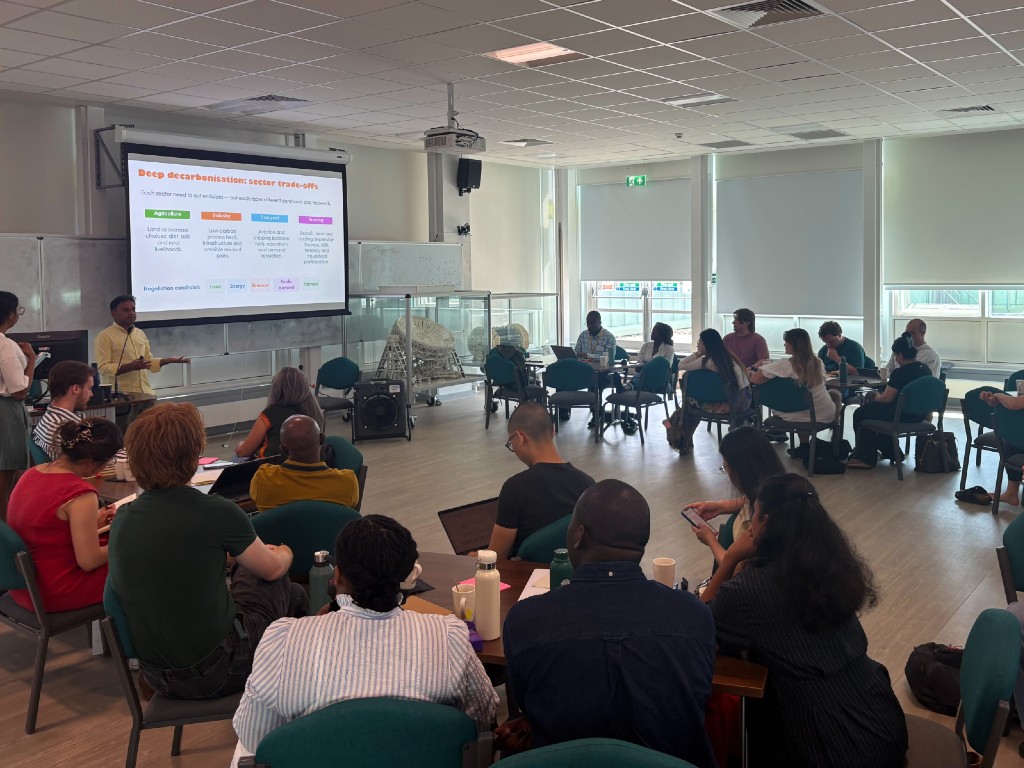
We welcomed Policy@Manchester, who introduced participants to the realities of policymaking, exploring how policy agendas are shaped and how researchers can maximise their impact through clear, concise, and well-timed communication. Practical advice was also provided on engaging with government and building relationships that help research inform decision-making.
We also heard from representatives at GMCA (Greater Manchester Combined Authority), who offered an applied example of climate policy in action. Discussions highlighted the realities of implementing climate initiatives at a regional level and demonstrated how collaboration between researchers and policymakers can help bridge the gap between knowledge and action.
Our career session, featuring professionals from academia, the civil service, and environmental consultancy, reinforced these messages. Speakers reflected on their career journeys, sharing advice on developing transferable skills, building networks, and navigating opportunities both within and beyond academia. Despite their different paths, all highlighted the value of collaboration, strong professional relationships, and the ability to work across organisational boundaries.
A shared hope: Why TECN matters
The value of bringing early career researchers together extends far beyond a three-day programme. Climate change is a problem that requires long-term thinking, sustained collaboration, and a willingness to learn from different disciplines and viewpoints. Creating opportunities for early career researchers to develop these capabilities is an investment in the future of climate research itself.
Collaboration is vital in climate research. The relationships formed during events like the TECN Summer School can lead to future research partnerships, interdisciplinary projects, and support networks that help researchers navigate both professional and personal challenges throughout their careers.
Across the three days, we very quickly experienced a sense of mutual belonging to a wider community of people working towards a common goal. At a time when climate-related events are intensifying and climate change narratives are increasingly politicised, the opportunity to build lasting professional connections with a shared sense of hope is just as valuable as the event sessions themselves.
Authors: Tara Taylor-Deacon and Wasundara Doradeniya are TECN leads at the University of Manchester
Related links
- Find out more about TECN
- What we do here at the Tyndall Centre for Climate Change Research
- Get more detail on our four research themes