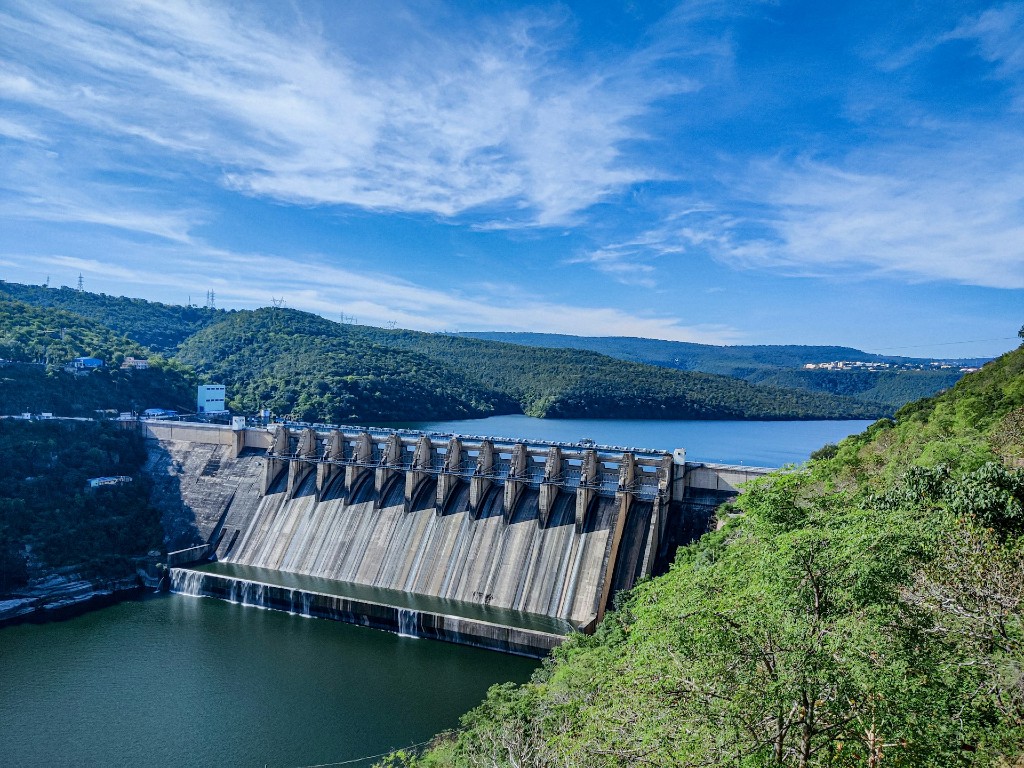
A significant amount of greenhouse gas emissions come from reservoirs and dams, and a new framework links those emissions directly to dam siting decisions. Here’s why it is a major step towards low-carbon hydropower, anywhere in the world.
Reservoirs are a recognised source of greenhouse gases, but a new spatial planning framework shows how optimising where dams are built could substantially reduce emissions.
Conventional approaches typically estimate emissions after projects are sited. By contrast, this spatially explicit, automated and transparent framework – published in Communications Earth & Environment – integrates large-scale emissions models into early decisions, allowing planners to compare multiple potential dam portfolios before construction begins.
Emissions-informed planning essential as hydropower expands
Globally, reservoirs contribute 1 to 2 per cent of human-caused greenhouse gas emissions. This includes carbon dioxide (CO₂) and methane (CH₄), with methane particularly important due to its high warming potential.
Emissions, however, vary widely, depending on climate, vegetation, hydrology, and reservoir characteristics. Tropical reservoirs, for example, generally produce more emissions. This variation makes careful dam siting critical as countries seek low-carbon energy and hydropower expands. Around 3,700 hydroelectric dams are currently under construction or planned worldwide.
Myanmar – used as a case study by Tomasz Janus, Christopher Barry, Shelly Win and Jaise Kuriakose – exemplifies this trend, with significant untapped hydropower potential and a large number of proposed projects. Many remain at the planning stage, making it possible to evaluate how alternative siting decisions could influence future emissions.
New framework brings spatial detail to decision-making
Estimating reservoir emissions is complex. Conventional models often rely on average emission factors, applied broadly, which can obscure major differences between individual reservoirs. More detailed models exist, but they are data-intensive and hard to integrate into planning workflows.
The new framework overcomes these limitations by combining spatially resolved emissions modelling with tools for comparing entire dam portfolios. Environmental data – including land cover, climate conditions, and reservoir characteristics – are used to estimate emissions for each potential site.
To do this, researchers automated the process of collecting the input data necessary to estimate the emission footprint of reservoirs, following the modelling approach used in the GHG Reservoir (G-res) tool. They then implemented this approach within free, open-source tools, extending the G-res model with new modules for estimating carbon dioxide (CO₂), methane (CH₄), and nitrous oxide (N₂O) emissions. Lastly, they made these complex models transparent using explainable artificial intelligence (xAI).
Myanmar case study shows practical impact
Applying the framework to Myanmar, researchers compared alternative portfolios of proposed and existing dams. Results revealed significant variation in emissions from individual reservoirs when compared with conventional methods, and national totals shifted significantly.
Incorporating emissions into early planning allowed the identification of lower-emission portfolios, capable of delivering similar electricity output.
Key benefits included:
- ~0.9 Mt CO₂e avoided per year
- Energy intensity as low as 3 g CO₂e/kWh
- 239 km² of forest and farmland conserved
- Number of lower-river barriers reduced from 28 to 7
These outcomes demonstrate that integrating emissions data at the planning stage can achieve the same energy generation with far less environmental impact.
Implications for hydropower policy
The study shows that hydropower’s climate impact is highly site-specific and influenced by planning choices. Using spatially detailed emissions data in early decision-making allows governments and developers to reduce the sector’s footprint while still meeting energy goals.
The authors note that the framework could be applied in other regions with major hydropower pipelines, though further validation and improved data availability are needed.
As hydropower expands, the research signals a shift: from assuming all hydropower is low carbon to actively designing dam portfolios that minimise emissions from the outset.
Related links
- Read the full journal article: “Planning with emission models reduces the carbon footprint of new reservoirs“
- Check out more news: See latest articles from the Tyndall Centre for Climate Change Research
- About us: Find out more about the Tyndall Centre for Climate Change Research