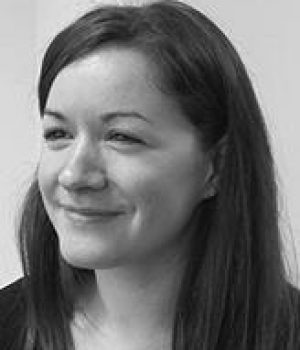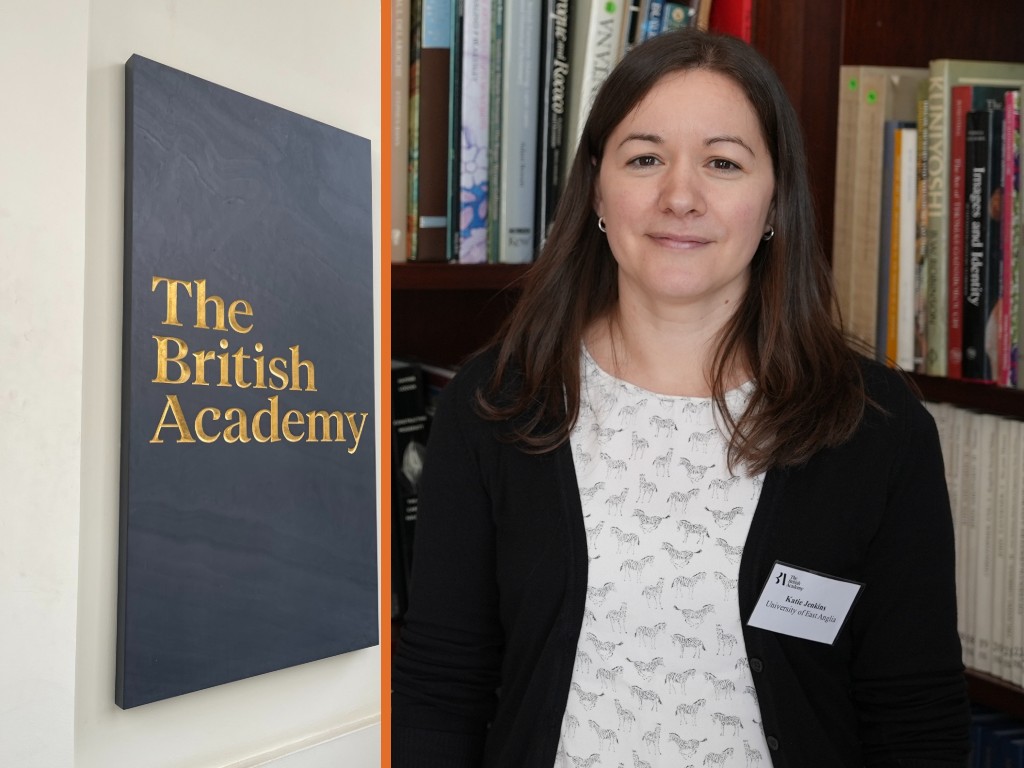
Through a British Academy Innovation Fellowship, Dr Katie Jenkins is exploring how we can better understand social vulnerability and embed it in climate adaptation policy – bridging the gap between academic research and real-world decision-making.
I would very much describe myself as an interdisciplinary researcher. But stepping into government has made me think differently about what that means in practice.
Over the past 15 years, I have been developing interdisciplinary approaches to modelling the social and economic consequences of climate change, particularly those linked to heat and drought, and how adaptation can reduce the risks.
When I saw the British Academy’s Innovation Fellowships, I was really interested in the topic on bringing social science skills and academic research into adaptation decision-making. I liked the opportunity of being seconded to work closely with policy teams and contribute directly to government priorities.
Career in climate research
I have been connected with the Tyndall Centre for Climate Change Research since near its beginning. I started my Masters in climate change at the University of East Anglia – it was the first year they ran it, and it was actually the first-ever Masters in climate change in the UK.
After my PhD and a couple of other roles elsewhere, I started on the OpenCLIM project. I then moved to UEA full time as a research fellow and later as a research lecturer for the Tyndall Centre.
This fellowship I am now working on, over the next 12 months, is with the Government Office for Science. They are overseen by the government’s Chief Scientific Advisor and are keen to keep developing the social science evidence around adaptation. They have to respond to need but can also proactively point to important evidence gaps or areas.
In my application, I pitched ideas around the skills I could bring, but the projects are very much meant to be co-designed. I am embedded in the Climate, Society and International team, and within that the Climate, Energy and Environment team, and have been learning about the work they do, and where I can fit in most closely. I have also given teach-ins on my research to the team and GO-Science more widely to help develop connections and ensure the work I do is relevant.
Understanding vulnerability
Right now, I’m co‑designing a programme with the Climate, Energy and Environment team. We’re exploring ideas around how to better capture current and future social vulnerability to inform risk and place-based climate adaptation.
There has been a lot of focus on hazards in terms of climate change. A lot of outputs from models or literature tell you about exposure – who will be affected and where they are. But there is far less evidence on the role of social vulnerability.
For instance, are we looking at the most deprived people in an area that are affected by flooding? People who don’t have cars and couldn’t evacuate? People who rely on carers? Adaptation needs to be tailored to not just where risks are greatest, but to the people most vulnerable within communities. Otherwise, actions that benefit some people may actually increase vulnerability for others.
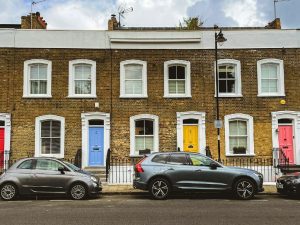
A good example is air conditioning. If wealthier households install it in somewhere like London, they reduce their own risk of overheating and any health conditions that come with that. However, you get extra heat from those air-conditioning units. The urban heat island increases. Those who are most vulnerable and can’t afford air conditioning may face even higher temperatures.
From evidence to action
Before this fellowship, I also created the UK’s first Adaptation Inventory: a searchable database of examples from households and sectors on what adaptation is happening on the ground, and how it has been implemented.
There is interest in evaluating how effective these actions are, as there is not much data on outcomes. I am particularly interested in looking beyond economic costs to the social benefits – what people and communities gain from them.
For instance, if there’s a scheme to stop slopes subsiding in heavy rainfall, which results in more trees being planted along footpaths and riverbanks, there are social benefits to that. It gives you a nicer area, it improves biodiversity, and greener spaces can be beneficial for health. We are thinking about how we could map out these co-benefits for society, linking it with how we understand vulnerability, and pathways to evaluate and incentivise such action.
Working in government
One of the most challenging things about working in government is the focus on evidence synthesis and collection. I could think of many new research projects, but this role is about working with existing evidence – what can we learn from what is already available? It’s a quicker turnaround, with different outputs. Who will use this evidence? What policies are there? What’s coming up in the future that this could feed into?
But I’m really enjoying the challenge. I like the way they work at the civil service – it’s efficient and fast-paced. In many ways, the work is similar to what we do in academia. They have great resources and some of the work they’re doing, and the outcomes that they are coming to, are just amazing. Everyone is working on so many projects at the same time – often completely diverse projects across different areas, using lots of interesting methods.
This experience has already changed how I think about my research work. I’m looking forwarding to bringing some of these approaches – and what I’ve learned about pitching ideas and writing for policymakers – back to the Tyndall Centre.
Related links