A new four-year programme led by the University of Bath, involving the University of East Anglia and other partners, will explore how to support climate action, behaviour change and climate resilience across the UK.
A major new programme has been announced exploring how to get people more involved in climate action and enable behavioural change.
Led by researchers at the University of Bath and involving the University of East Anglia (UEA), the four‑year People‑Centred Climate Resilience initiative will run until March 2030 with an investment of £3.83m from QCF, an independent charitable foundation.
The programme also involves the Universities of Manchester, Exeter and Aberdeen, alongside the charity Climate Outreach, and is based within the Centre for Climate Change and Social Transformations (CAST), funded by the Economic and Social Research Council (ESRC) and a partner of the Tyndall Centre for Climate Change Research. Several researchers involved in the programme are members of the Tyndall Centre.
Encouraging behaviour change
Building on CAST’s existing work, it will focus on how to encourage widespread changes in behaviour to support a low‑carbon, climate‑resilient future. It will combine academic research with real‑world trials to understand what works in practice and how successful approaches can be scaled up.
A key aim is to move beyond technology‑only solutions and place people at the centre of climate action. The team will explore what motivates people to positively engage with the climate crises, what holds them back, and how to design practical ways to support lasting change.
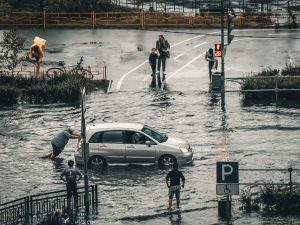
The programme will focus on both climate mitigation (reducing emissions and slowing temperature rise) and adaptation (helping people and communities respond to the impacts of climate change).
It will be led at the University of Bath by Prof. Lorraine Whitmarsh, director of CAST and a researcher in Bath’s Department of Psychology.
“This programme will enable us to test out what works to enable people to change their behaviour to be more climate-friendly,” said Prof Whitmarsh. “Unlike most previous work, this includes not only low-carbon actions, but also things which help people cope with the impacts of climate change.”
Meaningful actions
Irene Lorenzoni, member of CAST and Professor of Society and Environmental Change at UEA, said: “This programme aims to work with people and communities to implement actions that are meaningful for them and support resilience.
“Addressing climate change is not only about new technologies or policies, but also about understanding people’s experiences, aspirations and concerns. This work will help us learn how to support positive climate action in ways that are fair, practical and beneficial for individuals and communities.”
Key project activities will include:
- Understanding what shapes people’s attitudes and behaviours around climate change, and identifying the barriers to action
- Testing practical ways to support changes in everyday areas including travel, diet and energy use, and understanding the wider benefits for health and wellbeing
- Tracking how conversations about climate action spread, including the role played by influencers on social media
- Working with partners to roll out successful approaches across different sectors, such as local government, business and community organisations
- Training and supporting the next generation of researchers and community-based climate advocates
Removing barriers
This investment marks a major step forward for CAST and the team will work closely with policy makers, local authorities, businesses and communities to ensure the findings lead to real‑world change across the UK.
Prof. Whitmarsh said: “We want to better understand the different roles people can play in driving climate action. By recognising the range of perspectives people bring, we can learn what the public is willing to support – and what needs to happen to make positive action easier.
“From there, we can focus on removing the barriers that hold people back and help ensure climate policies work for everyone. We know people want to help tackle climate change, but need help to do so. This includes making climate-friendly actions – like installing low-carbon cooling instead of air-conditioners, or saving water – easier, cheaper, and the natural choice.”
This article was originally published on Wednesday 22 July 2026 as a news story by the University of East Anglia (UEA)
Related links
- Find out more our partnership with CAST
- More about our research theme on achieving health and wellbeing through climate action
- Listen to our podcast episode on the psychology of climate change