A new research strategy from the Tyndall Centre shows how one of the world’s oldest climate research centres is shaping evidence-based climate action for a sustainable and low-carbon future.
Since the UN Paris Agreement in 2015, the world finds itself in a somewhat different place. Peak global emissions have not yet been observed, current commitments are unlikely to meet the Paris targets, and 2024 was the hottest year on record globally. Societies are experiencing greater human-caused climate change, highlighting the need for research that supports informed decisions, adaptation, and equitable transitions.
An updated research strategy from the Tyndall Centre for Climate Change Research reflects this changing climate, and sets out how it will continue to produce high-quality, robust evidence to guide policy and societal responses. The strategy highlights priorities for the next five years, including producing world-leading research, expanding impact beyond academia, and strengthening engagement with policy makers and civil society. Four research themes will continue to connect the work of all partner institutes, ensuring that interdisciplinary expertise is fully integrated across the Centre.
Supporting and training future climate researchers will also remain central to the Tyndall Centre’s mission. Through the Tyndall Early Career Network (TECN), the Centre provides guidance and opportunities for masters and doctoral students, postdoctoral researchers, and early- to mid-career staff. This ensures that expertise continues to grow across the UK and internationally, strengthening society’s capacity to respond to climate challenges.
Strategic priorities and research themes
Founded in 2000, the Tyndall Centre brings together expertise from the Universities of East Anglia (UEA), Bath, Manchester, Newcastle, and Southampton. It currently has 300 members, ranging from PhD researchers through to eminent emeritus Professors, and representing a substantial body of the UK’s climate change expertise from across the scientific, engineering, social science and economic communities.
Over 25 years, the Tyndall Centre has become a thought-leading, internationally recognised source of research, informing the design and feasibility of policies at local, national, and international levels. Its work is impartial, rigorous, and focused on societal impact, helping guide decision-making on climate action.
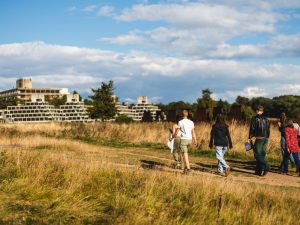
In September 2025, the Tyndall Centre hosted the Critical Decade for Climate Action Conference at its headquarters at the University of East Anglia (UEA), exchanging cutting-edge and evidence-based ideas with nearly 300 delegates from 20 countries around the world.
Read the research strategy
The research strategy 2025–2030 highlights how the Tyndall Centre will deliver evidence-based work and impact over the next five years, building on a 25-year legacy of research that is both useful and influential.
Read and download the new research strategy